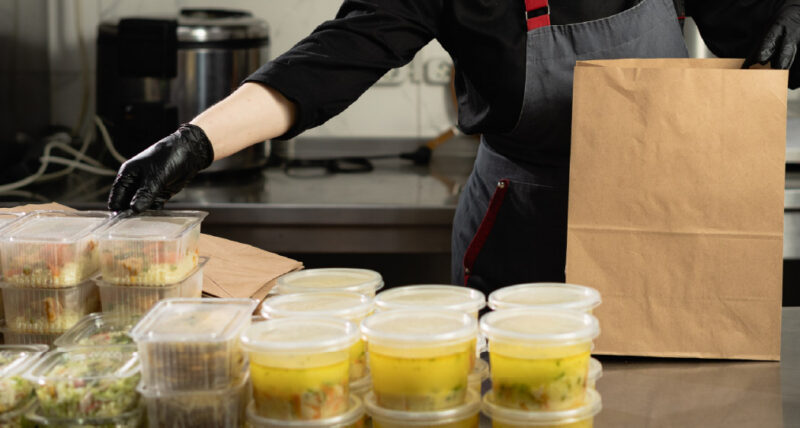
Your hot case is full, your grab-and-go cooler is moving, and customers keep coming back for the salads. So why doesn’t the margin on prepared foods always match how busy it looks?
Often the answer is in the pricing. Trim loss, cooking yield, packaging and end-of-day waste all change what an item really costs, and they rarely show up in a quick estimate. If your prices don’t account for them, a popular item can quietly lose money. Here’s how to keep that from happening.
1. Cost from yield, not purchase price
What you pay per pound isn’t what you pay per usable pound. Trim, cooking loss and portioning all raise the real cost. Chicken bought raw and sold cooked, or romaine with its core removed, needs to be costed on yield. Skip this step and every price downstream is a guess.
2. Build items from components
Cost the protein, sides, sauces and packaging separately, then combine them. Reusable components such as roasted vegetables or house dressings only need to be costed once. You can also see which component drives the plate cost, and that’s where an ingredient price increase will hit hardest. Don’t forget the container, lid, and label. On a grab-and-go item, they’re a real cost on every unit.
3. Price hot case items on what actually sells
Hot case items are usually sold by the pound, so the number that matters is the cost per pound of what you actually sell. This example is illustrative:
A batch of mac and cheese costs $21.00 and yields 12 lb, or $1.75 per pound.
At a 35% target cost, the price is $5.00 per pound.
If 1.5 lb gets discarded at close, only 10.5 lb sold, and the real cost is $2.00 per pound.
At $5.00, the item now runs at 40%, not 35%.
Short shelf life and daily demand swings make shrink hard to avoid in prepared foods. Build a shrink allowance into the price of anything that can’t be held for long.
4. Re-cost when prices move
One ingredient can sit inside dozens of recipes. When a cost rises, check the items that use it first, then adjust price, portion or recipe. This is the step that spreadsheets make hardest to keep up with.
5. Check what you should have used against what you used
If the gap between theoretical and actual usage keeps growing, look at over-portioning, waste, and unrecorded loss before assuming demand is the issue. Making it easier to maintain.
reciProfity keeps recipe costs tied to current ingredient prices. It applies Book of Yields conversions, shows where each ingredient is used, and flags price creep. It also supports waste tracking and nutrition labeling from USDA data. That makes it practical for a small deli team to keep prepared food pricing accurate without recalculating by hand.
See what your case really costs. Book a reciProfity demo and cost your first prepared items with your own numbers.